Area guide
Living in Kyoto: Wards, Rent, Land Prices, Machiya & Daily Life
The short answer
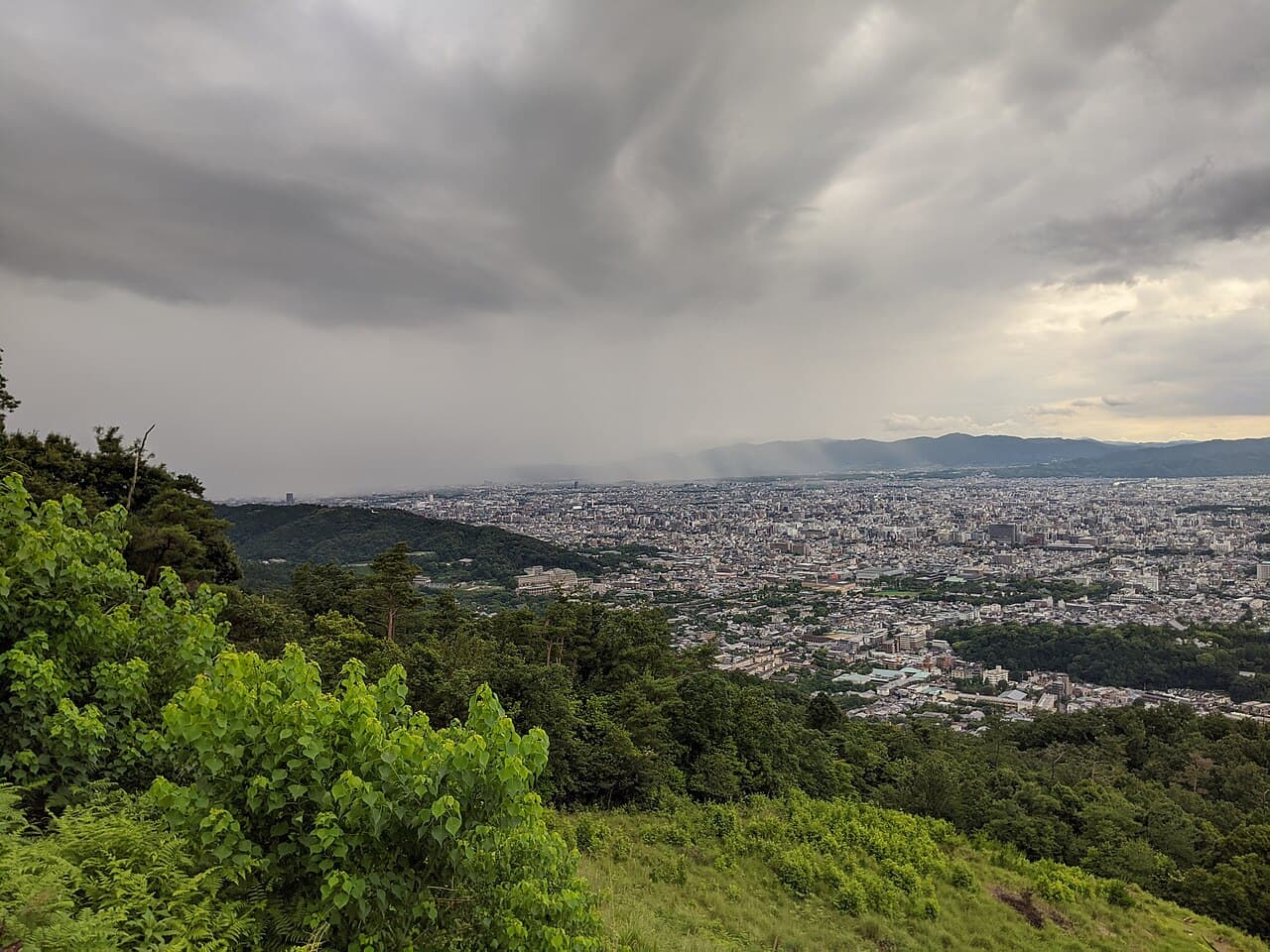
Kyoto (京都市, about 1.43 million people) is a big city under strict height and design limits, spread over 11 wards that range from dense old-town grids to mountain villages. About 43% of homes are rented. Private rents averaged ¥63,759 a month in the 2023 national housing survey. The 2026 official land price for residential areas averaged ¥247,700/m², and the average change on a year earlier was +3.6%.
- It suits people who want to live inside a historic city and are happy with low- and mid-rise housing. It also suits students and researchers, and people who want to take part in neighbourhood life through the local association.
- It suits less people who want a flat high up in a tower (height districts set limits from 10 to 31 metres, and scenic zones set their own, lower ones), or who want to run a short-term rental in a residential zone.
- Before you sign, check the exact address on the city hazard map, find out who runs the rubbish collection point for your building, and, if the house is an old wooden townhouse (machiya), read what the city's machiya rules mean for it.
We don't list properties, recommend agents or give investment advice. Every number below comes from a public source, with the date it describes and a link.
Kyoto in numbers
Kyoto City estimated its population at 1,426,879 on 1 September 2026, in 759,923 households, on a land area of 827.83 km² (Kyoto City estimated population, 1 Sept 2026). The resident register counted 70,236 foreign residents on 1 July 2026 (Kyoto City resident register, foreign residents, 1 July 2026).
Kyoto is also a university city. On 1 May 2025, 29 universities had their head office in the city, and 155,713 university and graduate students were enrolled at campuses in it, plus 1,694 at seven junior colleges. 16,568 of the university, graduate and junior-college students were foreign nationals (Kyoto City, 2025 School Basic Survey summary).
The 11 wards
The ward (ku) is where you register your address and deal with most paperwork. Kyoto's wards differ a lot in size: Kamigyo, Nakagyo and Shimogyo each cover about 7 km², while Sakyo and Ukyo each cover more than 240 km² and reach far into the mountains. The table puts three public figures side by side. They come from different surveys and dates, so read each column on its own.
| Ward | Population (1 Sept 2026) | Area (km²) | Residential land, average ¥/m² (1 Jan 2026) | Private rent, average ¥/month (2023) |
|---|---|---|---|---|
| Kita | 113,783 | 94.88 | 312,500 | 57,459 |
| Kamigyo | 82,590 | 7.03 | 458,900 | 61,311 |
| Sakyo | 161,619 | 246.77 | 284,100 | 63,172 |
| Nakagyo | 111,299 | 7.41 | 387,200 | 77,828 |
| Higashiyama | 34,749 | 7.48 | 341,400 | 62,204 |
| Yamashina | 128,026 | 28.70 | 149,400 | 61,796 |
| Shimogyo | 84,660 | 6.78 | 315,500 | 70,368 |
| Minami | 102,923 | 15.78 | 228,100 | 64,575 |
| Ukyo | 195,901 | 292.07 | 195,100 | 60,243 |
| Nishikyo | 142,269 | 59.24 | 227,800 | 65,933 |
| Fushimi | 269,060 | 61.68 | 166,500 | 57,792 |
| Kyoto City | 1,426,879 | 827.83 | 247,700 | 63,759 |
Sources: population and area, Kyoto City estimated population; land, Kyoto Prefecture, 2026 Land Price Publication summary; rent, Kyoto City, 2023 Housing and Land Survey table 18.
A few patterns stand out in the numbers:
- The historic centre is the most expensive. Kamigyo had the highest average residential land price in 2026, and Nakagyo the highest average private rent in 2023.
- Fushimi is the most populous ward, and in 2023 it held about half of the city's public rental homes (10,210 of 20,300) (table 8-4). Kita and Fushimi had the two lowest average private rents.
- Yamashina and Fushimi had the two lowest residential land averages of the 11 wards, each roughly a third of Kamigyo's.
- Nishikyo is the ward of houses. In 2023 about 54% of its homes were detached, against about 42% for the city as a whole (same table).
Land and homes
What land costs, and which way it is moving
Japan's official land price, chika kōji (地価公示, the government's annual appraisal of standard plots as of 1 January), is the main public benchmark for land prices. Kyoto Prefecture's summary of the 2026 results gives these averages for Kyoto City (Kyoto Prefecture, 2026 Land Price Publication summary):
| Use | Average price (¥/m², 1 Jan 2026) | Average change on a year earlier |
|---|---|---|
| Residential | 247,700 | +3.6% |
| Commercial | 1,361,400 | +10.1% |
The change column is the prefecture's average of the year-on-year change at each continuing survey plot, not a comparison of the two averages. The prefecture's own survey (chika chōsa, as of 1 July 2026) still showed residential land in Kyoto City rising, by an average of +2.8% (Kyoto Prefecture, 2026 land price survey summary). The two surveys use different plots.
Two cautions. First, these are averages of appraised plots, not what any particular home will cost. You can look up individual survey points on the national map at MLIT's Real Estate Information Library. Second, a past rise tells you nothing about future returns. We don't give investment advice.
What rent costs
The best public rent figure for the whole city comes from the national Housing and Land Survey (住宅・土地統計調査), taken every five years. Kyoto City republishes the 2023 results (as of 1 October 2023) for the city and each ward (Kyoto City statistics portal: Housing and Land Survey). For private rental homes (min'ei shakuya, 民営借家), excluding homes with zero rent:
- Average rent: ¥63,759 a month (table 18, sheet 112-2).
- Common or management fees come on top. Among private rentals that charge a common or management fee, the average was ¥6,004 a month. Averaged over all private rentals, including those that charge none, it was ¥4,484 (same table).
- About 64% of the city's 262,900 private rentals fell between ¥40,000 and ¥80,000 a month.
The ward averages are in the table above. They are survey estimates from 2023 and cover every size of home, so current asking rents for a particular flat will differ. Use them to compare wards, not to predict the rent on a particular flat.
Rental portals publish their own "average rent in Kyoto" figures. Those are averages of the flats listed on that portal, not public statistics, so we don't put them next to these numbers. For how Japanese leases work, see our guides to renting in Japan and move-in costs.
What kind of home you'll live in
The same 2023 survey counted 716,500 homes used only as dwellings. About 56% were in apartment buildings (kyōdō jūtaku), about 42% were detached houses and about 2% were row houses (nagaya). About 52% were owner-occupied and about 43% rented (table 8-4). The centre is mostly flats: in Nakagyo, about 74% of homes were in apartment buildings.
The survey also counted 105,300 vacant homes, about 12.5% of all 842,300 homes in the city. 54,800 of them were empty homes for rent (table 1-2).
Why Kyoto is low-rise: the landscape rules
In September 2007 the city brought in its New Landscape Policy (新景観政策). It reviewed building heights and design, protected views and "borrowed scenery", and tightened rules on outdoor advertising across the whole city. The city explains that high-rise condominiums were going up beside low machiya, and that this was eroding both the townscape and the living environment. Height districts set limits in six levels: 10, 12, 15, 20, 25 and 31 metres. The old 45-metre level was abolished, and the maximum height was lowered in about 30% of the urban area. Scenic zones (fūchi chiku, 風致地区) have their own, separate limits in four levels from 8 to 15 metres. In April 2021 the city added a special-permission route for buildings that contribute to community development (Kyoto City, Landscape Guideline: building heights, June 2021). The city publishes an English introduction to its landscape policy.
What this means for you as a resident:
- Height and design are set area by area. A plot's height district decides how tall a building can be, and design standards apply as well. If you're buying land to build on, or a building to rebuild, check both with the city before you commit.
- Views are part of the plan. Protecting views and borrowed scenery is one of the policy's stated aims, alongside heights and design.
Machiya: living in an old townhouse
Kyoto's traditional townhouses have their own ordinance. The Kyoto City Ordinance on the Preservation and Succession of Kyo-machiya (京町家条例), passed in November 2017, defines a Kyo-machiya as a wooden building built in or before 1950, when the Building Standards Act came into force, with a traditional structure and form (Kyoto City machiya site). According to the city's surveys, there were 47,735 machiya in FY2008–09 and 40,146 in FY2016. The FY2024 survey found 34,580. The city says about 800 a year, roughly two a day, are still being lost (same page).
What renting or buying one involves:
- Designated machiya need a year's notice before demolition. The city designates individual machiya and whole districts. For these, the owner must notify the city at least one year before starting demolition. Demolishing an individually designated machiya without notice, or before the year is up, can bring a non-criminal fine of up to ¥50,000. For all other machiya, the city asks owners to notify it before demolition (Kyoto City: demolishing a machiya). The city says the notice exists to make owners pause and look at alternatives, not to forbid demolition in the end.
- Designation also brings support. Designated machiya can get subsidies for part of the cost of repairs and restoration (Kyoto City: designation system).
- Agents are asked to tell you. The ordinance asks estate agents to inform owners, buyers and tenants about the designation, notification and support schemes. If you're looking at a machiya, ask the agent whether it is designated or in a designated district.
- Money and structure. The city's machiya site lists machiya-specific loans from local lenders, and seismic and fire retrofit support for machiya and wooden houses, with contacts (Kyoto City: rent, buy or finance a machiya). Before buying any older house, read our guide to what "cannot be rebuilt" means.
Tourism and short-term rentals in residential areas
Kyoto has its own rules on top of the national home-sharing law (minpaku). Nationally, a notified home-share (届出住宅) can operate up to 180 days a year. Kyoto's ordinance goes further: in exclusively residential zones (住居専用地域), home-sharing is limited to the period from noon on 15 January to noon on 16 March. The exceptions are homes where the operator actually lives and certified Kyo-machiya businesses that meet certain conditions (Kyoto City, home-sharing notification guide, 1 April 2026). For guesthouses licensed under the Inns and Hotels Act, the city's ordinance also restricts mixing lodging and ordinary homes in apartment buildings. The city runs a desk for reports about illegal home-shares (Kyoto City: local rules on home-sharing).
For a resident, this cuts both ways. The rules are meant to protect residential streets. But if you plan to buy a home and rent it to visitors, the zone it sits in may make that impossible for most of the year. Check the zoning first.
Hazards: check the address, not the city
Kyoto City's disaster portal publishes web hazard maps (Kyoto City web hazard map). You can view them on the Kyoto City disaster information map:
- River flooding: expected depth if rivers overflow in an extreme rainfall of roughly once in 1,000 years. The map also shows zones where flood water or bank erosion could bring down wooden houses, and how long flooding over 50 cm could last.
- Surface-water flooding from drains overflowing.
- Landslides: landslide warning zones and special warning zones, which Kyoto Prefecture designates.
- Earthquakes: expected shaking for earthquakes on each of nine faults around the city, and for the Nankai and Tonankai earthquakes. The shaking figures are based on the city's 2003 earthquake damage estimate, and for Nankai Trough shaking the city points you to Kyoto Prefecture's multi-hazard system. The city also has a multilingual earthquake hazard map (PDF).
Check your prospective address on the web map before you sign. When you buy or rent through a licensed agent, the agent must show you where the property sits on the official water-hazard maps before the contract. This has been a legal requirement since 28 August 2020 (MLIT), and MLIT's guidance applies it to sales, exchanges and leases (MLIT guidance, amended text).
We make no claims about any particular neighbourhood's risk. The map is the authority, and it changes.
Daily life
Weather
The Japan Meteorological Agency's 1991–2020 averages for its Kyoto station show hot summers and cool winters. August averages 28.5 °C, with an average daily high of 33.7 °C. January averages 4.8 °C, with an average daily low of 1.5 °C. Annual rainfall averages 1,522.9 mm (JMA climate normals, Kyoto). Heating, cooling and insulation vary a lot from one building to the next, so when you view a home, especially an older wooden one, ask how it is heated and cooled.
Getting around
The city subway has two lines (Kyoto City Bus & Subway guide). The Karasuma Line runs north–south for 13.7 km (Kokusaikaikan–Takeda, 15 stations). The Tozai Line runs east–west (17 stations). They meet at Karasuma Oike. City buses, JR and several private railways cover the rest of the city. Check how your prospective home connects to the places you'll go every day.
Rubbish
Kyoto separates household waste into burnable garbage, cans/glass bottles/PET bottles, plastics, recyclable paper, and small metal items and spray cans (Kyoto City English sorting leaflet, Nov 2023). Two details catch newcomers:
- Who collects decides the bag. For waste that the city collects, you use city-designated bags. Where your waste is collected by a private contractor, the leaflet says to use a strong colourless or white transparent bag and to ask your apartment building's administrator where the collection point is.
- Ask the neighbourhood association (chōnaikai) where your pickup point is. The city says so in its leaflet. If you're unsure, the local City Beautification Office can tell you.
Oversized items need a request by phone or online and a fee sticker (same leaflet).
Doctors and hospitals in your language
- Free medical interpreters: under a city-backed scheme, interpreters are sent to three hospitals: Kyoto City Hospital (Nakagyo), Ijinkai Takeda General Hospital (Fushimi) and Kyoto Katsura Hospital (Nishikyo). It is for outpatients only, and some of the hospitals ask you to book at least five days ahead (KCIF medical interpreter service).
- Nights, weekends and holidays: the Kyoto City Emergency Medical Center near Nijo Station (075-354-6021) covers paediatrics, internal medicine and some other departments at set hours. KCIF also lists clinics with foreign-language-speaking doctors and the prefecture's medical search engine (KCIF: hospitals and dental clinics). For an ambulance, call 119.
Schools for foreign children
Children of elementary and junior-high-school age can attend a local public school after completing the procedure. When you register your address at the ward office (or branch office), say that you'd like your child to attend a Japanese school. You'll receive a notice naming the school, which you then take to the school, and the school explains the next steps (KCIF: childbirth, raising children and education). KCIF's page also covers kindergartens, childcare and international schools. If you're considering an international school, check fees, curriculum and waiting lists with the school directly. We haven't reviewed them.
One place to start
For registering your address, health insurance, pensions, tax and the rest of the paperwork, the Kyoto City International Foundation (KCIF) has an English living guide (KCIF: Easy Living in Kyoto).
History and culture, as a resident lives it
In Kyoto, much of neighbourhood life still runs through small, local organisations. The city counts more than 6,000 neighbourhood associations (jichikai and chōnaikai, 自治会・町内会). They are voluntary and run by residents. Typical activities are street cleaning and looking after rubbish points, crime and disaster preparedness, keeping an eye on children and older people living alone, and social events such as Jizō-bon (地蔵盆). If you'd like to join and don't know your neighbours, the city has a form that puts you in touch (Kyoto City: join your neighbourhood association). Jizō-bon closes the summer. At root it is a memorial service for the bodhisattva Jizō, handed down in Kyoto and elsewhere in the Kinki region, and it often includes juzu-mawashi, where people sit in a circle and pass a huge rosary around (Kyoto City cultural heritage office: Jizō-bon).
The word gakku (school district) has a longer history here than elsewhere. Kyoto's gakku come from self-governing neighbourhood groups called machigumi, which date back to the Muromachi period. In 1869, according to the city, townspeople pooled their money to open 64 "bangumi" elementary schools based on these groups. Many of those schools have since merged, but the old districts (moto-gakku, 元学区) live on in festivals and sports days (Kyoto City cultural heritage office: gakku). Neighbourhood organisation is also what runs the Gion Matsuri floats. The festival belongs to Yasaka Shrine, and its float events are run by organisations called chōjū (町中) (Agency for Cultural Affairs: Kyoto Gion Matsuri float events). They were designated an Important Intangible Folk Cultural Property in 1979 (Agency for Cultural Affairs database) and inscribed by UNESCO in 2009 (Kyoto City). If you live in one of the float neighbourhoods, the float events are organised within your own neighbourhood, so ask your association whether and how newcomers can take part.
For festival dates, what to see, and the story behind them, go to our sister sites: Kyoto events, Gion Matsuri, why Gion Matsuri exists and the Kyoto culture calendar. For hands-on experiences, see Kyoto cultural experiences and Gion.
Renting or buying: the process
The rules are the same nationwide, and our step-by-step guides apply unchanged in Kyoto:
- Renting: how leases, key money and guarantors work and what you pay at move-in
- Buying: can foreigners buy property in Japan?, every fee and tax when you buy, why your agent may also represent the seller, what a judicial scrivener does, and, for older plots, what "cannot be rebuilt" means
- Non-residents who buy: the FEFTA Form 22 reporting rule
About this guide
SUMIKA is an independent guide. We don't list or broker property, we have no commercial relationship with any agent or developer, and nothing here is investment, legal or tax advice. Land prices and rents are dated public statistics. They describe areas, not individual homes, and they change. Before you commit, check the current figures, the hazard map for the exact address, the zoning and landscape rules for the plot, and the lease or sales contract with a licensed professional. Figures checked on 25 September 2026.
Key facts
- Population
- 1,426,879 (Kyoto City estimate, as of 1 Sept 2026); 70,236 registered foreign residents (as of 1 July 2026). Area 827.83 km², 11 wards
- Official land price, residential
- City average ¥247,700/m², average change +3.6% (Land Price Publication, as of 1 Jan 2026). Ward averages range from ¥149,400 (Yamashina) to ¥458,900 (Kamigyo)
- Official land price, latest survey
- Prefectural land price survey: Kyoto City residential average change +2.8% (as of 1 July 2026; different plots from the January figures)
- Private rent
- Average ¥63,759/month excluding zero-rent homes; common/management fees ¥6,004 among private rentals that charge one (¥4,484 averaged over all, including those that charge none) (Housing and Land Survey, as of 1 Oct 2023). Ward averages ¥57,459 (Kita) to ¥77,828 (Nakagyo)
- Housing stock
- About 56% of homes in apartment buildings, 42% detached, 2% row houses; about 52% owner-occupied and 43% rented; 105,300 vacant homes, 12.5% of all homes (as of 1 Oct 2023)
- Height limits
- Height districts: six levels of 10, 12, 15, 20, 25 and 31 m under the New Landscape Policy (in force since Sept 2007); scenic zones have separate limits of 8–15 m (guideline as of June 2021)
- Machiya
- 34,580 Kyo-machiya in the FY2024 survey, about 800 lost a year (city figures). Designated machiya: demolition notice at least 1 year ahead (as of 25 Sept 2026)
- Home-sharing (minpaku)
- Notified home-shares (届出住宅) in exclusively residential zones: limited to noon 15 Jan – noon 16 Mar, with exceptions (city guide as of 1 April 2026)
- Students
- 29 universities headquartered in the city; 155,713 university and graduate students; 16,568 foreign students incl. junior colleges (as of 1 May 2025)
- Climate
- JMA Kyoto normals 1991–2020: August mean 28.5 °C (daily high 33.7 °C), January mean 4.8 °C (daily low 1.5 °C), 1,522.9 mm rain a year
FAQ
- How much is rent in Kyoto?
- The latest public figure is the 2023 Housing and Land Survey: private rental homes in Kyoto City averaged ¥63,759 a month, excluding homes with zero rent. Among private rentals that charge a common or management fee, it averaged ¥6,004; averaged over all private rentals, including those that charge none, ¥4,484. About 64% fell between ¥40,000 and ¥80,000. Ward averages ran from ¥57,459 (Kita) to ¥77,828 (Nakagyo). These are 2023 survey averages across all home sizes. Current asking rents for a particular flat will differ.
- Are land prices in Kyoto going up?
- Yes, according to the official data. In the 2026 Land Price Publication (as of 1 January), Kyoto City's residential average was ¥247,700/m², with an average change of +3.6%. The July 2026 prefectural survey still showed +2.8%. These describe the past, not a forecast, and this isn't investment advice.
- Why are there so few tall buildings in Kyoto?
- Since September 2007, the city's New Landscape Policy has set building heights by area in six levels, from 10 to 31 metres. It abolished the old 45-metre level and lowered the maximum height in about 30% of the urban area. Scenic zones have their own, lower limits of 8 to 15 metres. It also sets design standards and protects views. In 2021 the city added a special-permission route for buildings that contribute to community development.
- Can I rent or buy a machiya in Kyoto?
- Yes. Machiya are rented and sold like other homes, but some are designated under the city's 2017 machiya ordinance. For a designated machiya, or one in a designated district, the owner must notify the city at least a year before starting demolition, and repair subsidies are available. The city's machiya site lists loans, retrofit support and a consultation service. Ask the agent whether the house is designated.
- Can I run an Airbnb-style rental in a Kyoto home?
- For a notified home-share (届出住宅) in an exclusively residential zone, Kyoto's ordinance limits operation to noon on 15 January to noon on 16 March. The exceptions are homes where the operator actually lives and certified Kyo-machiya businesses that meet set conditions. Elsewhere, the national 180-days-a-year cap applies. Check the zoning and the city's home-sharing guide before you buy.
- Can I see a doctor in English in Kyoto?
- Yes, with help. Free medical interpreters are sent to three hospitals: Kyoto City Hospital, Ijinkai Takeda General Hospital and Kyoto Katsura Hospital. The service is for outpatients only, and some of the hospitals need five days' notice. For nights and weekends, the Kyoto City Emergency Medical Center near Nijo Station covers paediatrics and internal medicine at set hours. The Kyoto City International Foundation lists clinics with foreign-language-speaking doctors.
This article is general information, not legal, tax or investment advice. Rules, taxes and procedures change and every situation differs — confirm with the official sources linked here and consult a licensed professional (lawyer, tax accountant, judicial scrivener or licensed agent) for your own case. We sell nothing and list no properties (see /how-we-review).