Area guide
Living in Setagaya — a Renter's and Buyer's Guide for Foreign Residents
Who Setagaya suits
Setagaya (世田谷区) is Tokyo's largest ward by population — 931,853 people as of July 1, 2026, of whom 31,845 are foreign nationals, across a comparatively spacious 58.05 km² (Setagaya City official statistics). It reads less like "central Tokyo" and more like a vast collection of quiet, low-rise residential neighbourhoods, several of which happen to have a famous, lively street attached (Shimokitazawa, Sangenjaya). It suits people who want space, quiet streets, and a genuinely residential feel over being in the middle of the action — with the trade-off that central Tokyo is a train ride away, and how long that ride is depends enormously on exactly where in the ward you live.
The transport shape: easy east-west, harder north-south
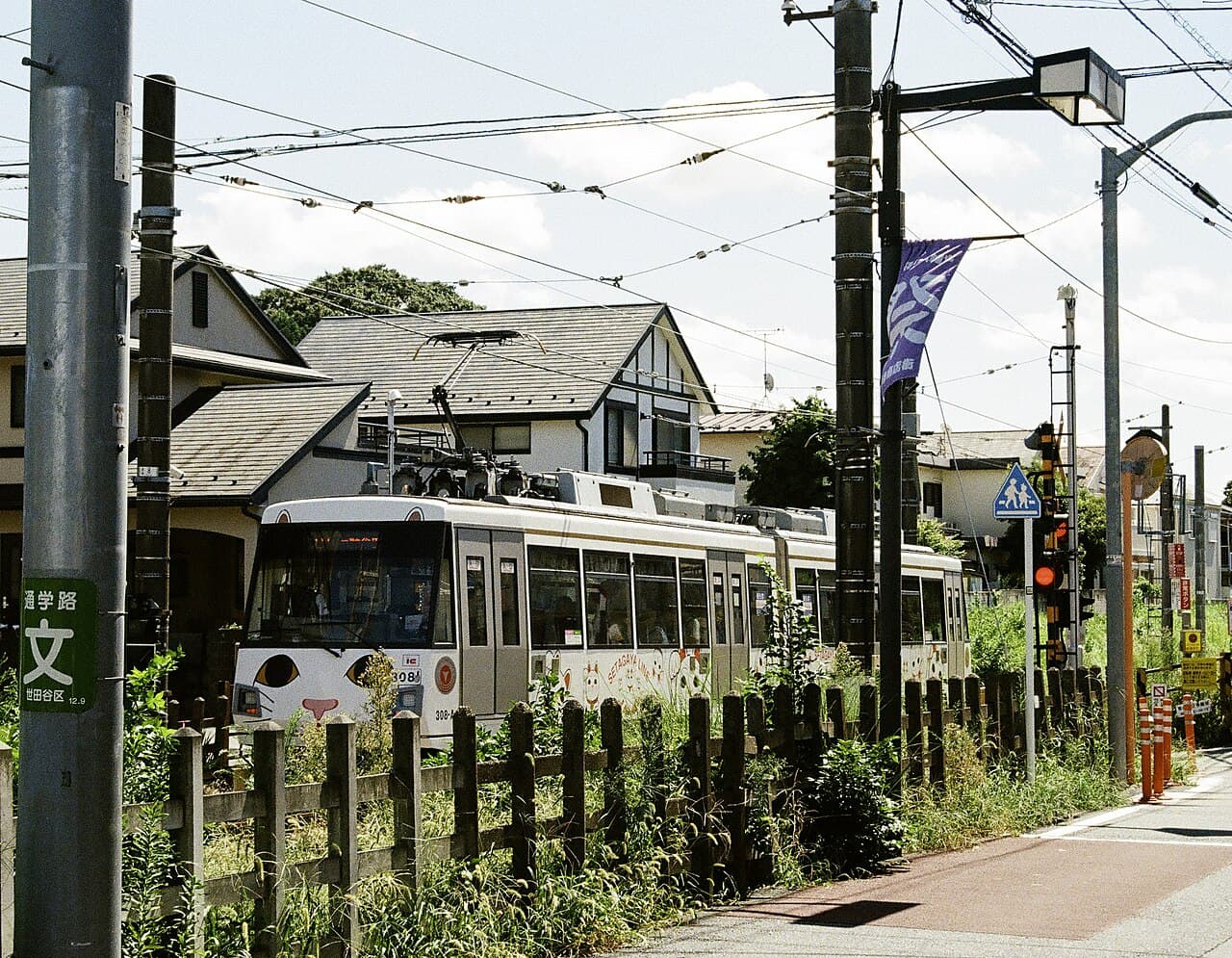
Three private railway lines cross Setagaya, all running broadly east-west toward central Tokyo: the Keio Line (north edge — Shimo-Takaido, Sakurajosui, Kamikitazawa, Roka-Koen and Chitose-Karasuyama stations), the Odakyu Odawara Line (Higashi-Kitazawa, Setagaya-Daita, Umegaoka, Gotokuji, Kyodo, Chitose-Funabashi, Soshigaya-Okura, Seijogakuen-mae and Kitami, plus Shimokitazawa — ten stations within the ward), and the Tokyu Den-en-toshi Line (six of its stations sit within the ward). The Keio Inokashira Line also cuts across the ward's northeast, through Shimokitazawa. The only line that runs north-south through the ward is the small, single-car Tokyu Setagaya Line — a 5.0km tram connecting Sangenjaya and Shimotakaido. Practically: getting to Shibuya or Shinjuku from almost anywhere in Setagaya is usually one straightforward ride; getting to a different part of Setagaya itself, or to a station on a different line, is often the slower, more roundabout trip.
The feel, area by area
Setagaya isn't one neighbourhood — it's dozens, and the character shifts fast between them. Shimokitazawa and Sangenjaya are the ward's famous, dense, youthful pockets — bars, live houses, small independent shops, and correspondingly the ward's highest housing demand. Move a few stations further out along any of the three lines — Kyodo, Umegaoka, Chitose-Funabashi, Soshigaya-Okura — and the pace drops fast: low-rise houses, small local shopping streets, and a much quieter, more family-oriented feel. Seijogakuen-mae, further out on the Odakyu line, is a well-known, comparatively affluent, established residential area. None of this is a ranking — it's a genuine trade-off between energy and quiet that's worth actually walking through before committing to an area.
Renting here
As with all of Tokyo, expect the standard move-in cost structure — deposit, possibly key money, an agency fee, and a guarantor-company fee. Setagaya has no ward-specific rent statistic we can responsibly quote as a fixed range; what's consistently true, rather than a specific number, is that identical floor space costs meaningfully more within a few minutes of Shimokitazawa or Sangenjaya than it does around the ward's quieter Odakyu- or Keio-line stations — so "average rent in Setagaya" is close to meaningless without naming the station.
Buying here
The ordinary purchase process and cost structure apply the same way in Setagaya as anywhere else in Tokyo — there's no ward-specific exemption or extra rule for buyers. Setagaya's mostly low-rise, older residential fabric means the road-frontage rule is genuinely worth checking on any specific property here, since narrow older lanes are common in exactly the quiet residential pockets that make the ward appealing.
Foreigner-facing services
Setagaya City government runs a dedicated Foreign Residents' Advisory Desk inside the Setagaya General Life Support Center, with in-person consultation in English (Monday–Friday) and Chinese (Monday, Tuesday, Thursday), plus tablet-based interpretation covering additional languages including Korean, Thai, Vietnamese, Tagalog, Spanish and Russian, per the ward's own official page (a separate phone-interpretation service, not the tablet, extends to further languages including Urdu). The ward also publishes an official multilingual life-in-Setagaya guide directly on its website, and a ward-affiliated intercultural centre runs Japanese classes and community events for residents. This is a genuinely more built-out set of foreign-resident services than many Tokyo wards offer directly through the ward office itself.
Next step
If Setagaya's food and culture side is what's pulling you here rather than the other way around, our sister sites cover it directly — UMAMI HUNT for restaurants and MICHI for cultural experiences in the area are the right next stop, not this site.
This describes the general character of Setagaya as of 2026-07-16 and is not investment, legal, or relocation advice. Rents, availability and services change; confirm current specifics with a licensed agent, the specific neighbourhood, or Setagaya City directly.
Key facts
- Population
- 931,853 total, including 31,845 foreign nationals (Setagaya City official statistics, as of July 1, 2026)
- Area
- 58.05 km² — Tokyo's largest ward by population, on comparatively spacious land for central Tokyo
- Atmosphere
- Mostly low-rise and residential; quiet outside a few dense hubs (Shimokitazawa, Sangenjaya)
- Access
- Keio, Odakyu and Tokyu Den-en-toshi lines run east-west into Shibuya/Shinjuku; only the Tokyu Setagaya Line tram runs north-south, so cross-ward trips are often slower than trips into central Tokyo
- Foreigner-friendliness
- Ward-run Foreign Residents' Advisory Desk (English Mon-Fri, Chinese Mon/Tue/Thu, tablet interpretation for more languages) plus an official multilingual life guide
FAQ
- Is Setagaya good for families?
- It's one of Tokyo's classic family-oriented wards — spacious by Tokyo standards, mostly low-rise, and residential — with the trade-off that your commute depends heavily on which of its train lines you end up living on.
- Is Setagaya expensive?
- It varies enormously by station — a few minutes from Shimokitazawa or Sangenjaya commands a real premium over the ward's quieter Odakyu- or Keio-line stations for equivalent space, so treat 'Setagaya' as a range, not a single price point.
- What support does the ward offer foreign residents directly?
- A dedicated Foreign Residents' Advisory Desk with English and Chinese in-person consultation plus tablet interpretation for several more languages, and an official multilingual guide to living in the ward — more built out than many Tokyo wards provide directly.
This article is general information, not legal, tax or investment advice. Rules, taxes and procedures change and every situation differs — confirm with the official sources linked here and consult a licensed professional (lawyer, tax accountant, judicial scrivener or licensed agent) for your own case. We sell nothing and list no properties (see /how-we-review).