Area guide
Living in Fukuoka: Neighborhoods, Rent, Land & Daily Life
The short answer
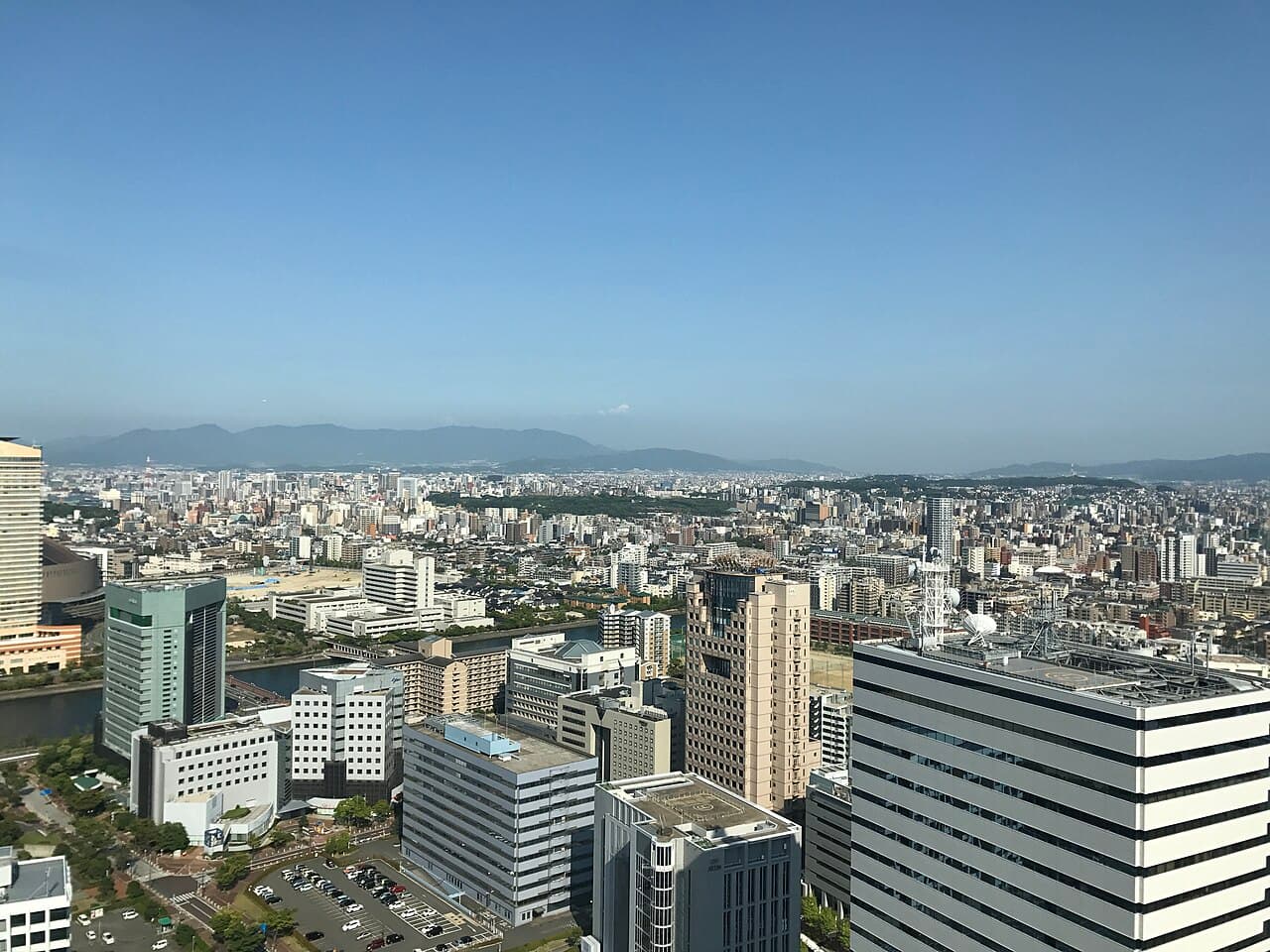
Fukuoka (福岡市, about 1.67 million people) is a compact coastal city where the airport sits two subway stops from Hakata Station, most people rent, and most homes are flats in apartment buildings. Private rents averaged ¥59,656 a month in the 2023 national housing survey. Land has been getting much more expensive: the 2026 official land price for residential areas averaged ¥258,100/m², up 7.0% on a year earlier.
- It suits people who want a big-city job market and airport without Tokyo's commute. It also suits single people and couples who are happy in a flat, and families who want a city where the sea and hills are close.
- It suits less people who need a detached house near the centre on a modest budget, or who want a large, established English-speaking community on the scale of Tokyo's.
- Before you sign, check the exact address on the city hazard map, and read your ward's household-waste rules. Fukuoka's rubbish goes out at night, which surprises people from almost everywhere else.
We don't list properties, recommend agents or give investment advice. Every number below comes from a public source, with the date it describes and a link.
Fukuoka in numbers
Fukuoka City estimated its population at 1,672,066 on 1 September 2026, on a land area of 343.47 km² split into seven wards: Higashi, Hakata, Chuo, Minami, Jonan, Sawara and Nishi (Fukuoka City estimated population, 1 Sept 2026). The ward is where you'll register your address and deal with most paperwork. Its register counted 61,365 foreign residents at the end of August 2026 (Fukuoka City registered population, 31 Aug 2026). That is a real community, but a modest one next to Tokyo or Osaka.
Land and homes
What land costs, and which way it is moving
Japan's official land price, chika kōji (地価公示, the government's annual appraisal of standard plots as of 1 January), is the least-biased public benchmark there is. Fukuoka City's summary of the 2026 results covers 291 survey plots:
| Use | Average price (¥/m², 1 Jan 2026) | Change on a year earlier |
|---|---|---|
| Residential | 258,100 | +7.0% |
| Commercial | 1,634,800 | +9.0% |
Source: Fukuoka City, 2026 Land Price Publication (Fukuoka City portion).
The ward-by-ward residential averages show how quickly prices fall as you move out from the centre (ward table, residential, 2026):
| Ward | Residential average, ¥/m² (1 Jan 2026) | Change |
|---|---|---|
| Chuo | 593,100 | +6.7% |
| Hakata | 273,300 | +7.6% |
| Sawara | 271,100 | +7.7% |
| Minami | 238,000 | +6.8% |
| Jonan | 197,800 | +6.7% |
| Nishi | 162,400 | +7.9% |
| Higashi | 152,700 | +5.9% |
In the same table, the citywide average of survey plots rose from ¥168,500/m² in 2021 to ¥258,100 in 2026. The set of plots differs from year to year, so treat this as a rough indicator. The prefecture's own survey (chika chōsa, as of 1 July 2026, 111 residential plots) still shows a rise, but a smaller one: ¥230,800/m², +5.5% (Fukuoka City, 2026 prefectural land price survey). The two surveys use different plots, so compare each survey's change, not the two averages.
Two cautions. First, these are averages of appraised survey plots, not what any single plot or flat will cost. You can look up individual survey points on the national map at MLIT's Real Estate Information Library. Second, a past rise tells you nothing about future returns. We don't give investment advice.
What rent costs
The best public rent figure for the whole city comes from the national Housing and Land Survey (住宅・土地統計調査), taken every five years. Fukuoka City republishes the 2023 results (as of 1 October 2023) for the city and each ward (Fukuoka City, 2023 Housing and Land Survey tables). For private rental homes (min'ei shakuya, 民営借家), excluding homes with zero rent:
- Average rent: ¥59,656 a month, plus common or management fees averaging ¥4,481 among homes that charge one (table 112-2).
- About 64% of the city's 421,400 private rentals fell between ¥40,000 and ¥80,000 a month.
By ward, the average private rent ranged from ¥50,898 in Jonan to ¥65,868 in Chuo and ¥65,990 in Sawara. Hakata came in at ¥60,734, Nishi at ¥57,983, Minami at ¥57,300 and Higashi at ¥54,666 (same table). These are survey estimates from 2023. They cover every size of home, from bedsits to family flats, and today's asking rents are likely to be higher. Use them to compare wards, not to predict the rent on a particular flat.
Rental portals publish their own "average rent in Fukuoka" figures. Those are averages of the flats listed on that portal, not public statistics, so we don't put them next to these numbers. For how Japanese leases work, see our guides to renting in Japan and move-in costs.
What kind of home you'll live in
The same 2023 survey shows a city of flats and renters. Of 851,500 homes used only as dwellings, about 79% were in apartment buildings (kyōdō jūtaku) and about 20% were detached houses. About 60% were rented (table 8-4). About 52% of households were one person living alone (table 3-2). Chuo and Hakata wards are almost entirely flats. Detached houses are more common in the outer wards: Higashi, Minami, Jonan, Sawara and Nishi.
Hazards: check the address, not the city
Fukuoka City publishes a Comprehensive Hazard Map (福岡市総合ハザードマップ) covering river flooding, surface-water flooding, landslides, storm surge, earthquake shaking, tsunami and irrigation-pond failure. You can view it as an interactive map or as ward PDFs (Fukuoka City hazard map). The site is in Japanese, but typing your prospective address into the web map is the single most useful 10 minutes you can spend before signing.
- Flooding: the flood and surface-water maps show expected depth and the nearest evacuation sites. The city itself warns that city flooding can build fast in a short downpour and that underpasses and basements are dangerous (flood page).
- Earthquake: the shaking map models an earthquake on the southeastern part of the Kego Fault (警固断層), part of a fault zone the city says runs through Fukuoka. The city says this scenario could cause more damage than the 2005 West Off Fukuoka earthquake (earthquake page).
- When you rent or buy: since a 2020 rule change, the licensed agent must show you where the property sits on the official water-hazard map before the contract. The city points this out on the hazard map site. Ask to see it if the agent doesn't bring it up.
We make no claims about any particular neighbourhood's risk. The map is the authority, and it changes.
Neighbourhoods, from a resident's point of view
These are the areas newcomers ask about most. It isn't a ranking, and we have no properties to sell you in any of them.
Tenjin and Daimyo (Chuo ward)
Tenjin is the shopping and office centre. Tenjin station (Airport Line), Tenjin-minami station (Nanakuma Line) and the Nishitetsu private railway terminal are all here. Living here means walking to almost everything, small flats, and Chuo's high prices: the ward had the city's highest average residential land price in 2026 (¥593,100/m²).
Hakata Station area (Hakata ward)
Hakata Station is the shinkansen and JR hub, and the airport is two subway stops away (via Higashi-Hie). That makes this the natural base for people who travel a lot. Most of the housing is flats: in 2023, rented homes outnumbered owner-occupied ones by more than three to one. It is also the historic merchant half of the city (see below). Its older streets are where the Yamakasa festival neighbourhoods are.
Ohori, Ropponmatsu and around (Chuo ward)
The area around Ohori Park and the former castle grounds is greener and calmer, and it is still inside the centre. The Airport Line serves the park side, and the Nanakuma Line serves Ropponmatsu. It is also in Chuo ward, so the land-price averages above apply here too.
Nishijin and Momochi (Sawara ward)
Nishijin, on the Airport Line west of the centre, is known for its local shopping streets (shōtengai). Momochi, towards the sea around Fukuoka Tower, is newer and more spread out. Sawara's 2023 average private rent (¥65,990) was about the same as Chuo's. That average is a mix of very different homes, so check actual listings street by street.
The outer wards: Higashi, Minami, Jonan and Nishi
For more space for less money, look here. In 2026 these four wards had the lowest average residential land prices in the city (¥152,700 to ¥238,000/m²), and detached houses are a bigger share of their housing. The trade-off is transport: check whether your home is near a subway, JR or Nishitetsu station, or whether you will depend on buses. Higashi is where the Hakozaki Line runs. Jonan and parts of Sawara and Nishi are served by the Nanakuma Line.
Daily life
Getting around
The city subway has three lines, 31.4 km in total (Fukuoka City Subway): the Airport Line (Meinohama–Fukuoka Airport), the Hakozaki Line (Nakasu-Kawabata–Kaizuka) and the Nanakuma Line (Hashimoto–Hakata, extended to Hakata in 2023). The subway operator gives the trip from the airport as 5 minutes to Hakata and 11 minutes to Tenjin (business overview PDF). Between Fukuoka Airport and Hakata there is one station, Higashi-Hie (station page). One practical catch: the subway serves the domestic terminal. The airport says it is not directly connected to the international terminal (Fukuoka Airport). JR, Nishitetsu trains and a dense bus network cover the rest of the city.
Rubbish goes out at night
Fukuoka's rule surprises most newcomers. Household waste goes out on your collection day, between sunset and midnight, in city-designated bags sold at supermarkets and convenience stores, sorted into burnable waste, non-burnable waste, and bottles and PET bottles (FCIF guide). Large items need a booking as sodai gomi (oversized waste). The city's own English sorting site lets you search item by item and look up your collection days (Fukuoka City household waste). Getting this wrong is one of the quickest ways to annoy neighbours, so learn it in your first week.
Doctors and hospitals in your language
- Fukuoka City Medical Interpreting Call Center: 092-733-5429, free (you pay for the call), 24 hours a day, every day, in 20 languages. It interprets over the phone between you and a hospital or pharmacy (Fukuoka City).
- The Fukuoka Medical Information Guide lets you search for clinics by the language they support, and the prefecture's Fukuoka International Medical Support Center (092-286-9595, 24 hours) also offers phone interpretation. Both are listed by the city's international foundation (FCIF medical page).
- For evenings and holidays, FCIF lists the city's after-hours clinics and the prefectural emergency medical information number (FCIF emergency page). For an ambulance, call 119.
Schools for foreign children
Public elementary and junior high school is open to foreign children, but it isn't automatic. Education is not compulsory for foreign nationals, so you apply. For a child starting first grade, the city sends an enrolment information letter and an application form in late September of the year before entry, and you return them by the deadline in the letter. For a child joining mid-year or in a later grade, ask your ward office's Citizen Section or the Board of Education's Education Support Section, the contacts FCIF gives for enrolment questions (FCIF: elementary and junior high schools). For children who are still learning Japanese, the city sends instructors to give one-to-one support for a set period. FCIF also says there are Japanese classes at eight elementary and four junior high schools in areas where many foreign residents live (FCIF: Japanese language support). Ask the Board of Education's Education Support Section which school your address feeds into. If you are considering an international school, check fees, curriculum and waiting lists with the school directly. We haven't reviewed them.
One place to start
For registering your address, health insurance, pensions, tax and the rest of the paperwork, the Fukuoka City International Foundation (FCIF) has an English living guide, and its International Center at Tenyamachi in Hakata ward takes questions in several languages (FCIF living guide).
History and culture, as a resident lives it
Fukuoka is two towns that grew into one. Hakata is the old port and merchant town between the Naka and Mikasa rivers. Fukuoka is the castle town that Kuroda Nagamasa, the first lord of the Fukuoka domain, began building in 1601. He is said to have named it after Fukuoka in Bizen province (now Setouchi, Okayama), a place linked to his family (Fukuoka City Museum). When the city was created in 1889 it was named Fukuoka. The next year, councillors from the Hakata side proposed changing the name to Hakata. The vote was tied twice, so the name stayed (Fukuoka City Council history). The main railway station, though, is Hakata. For a resident, that split still shapes the city: Tenjin and the old castle grounds on one side, the station and the old merchant streets on the other.
The Hakata side is also where you meet the nagare (流). These are neighbourhood groups that go back to Toyotomi Hideyoshi's replanning of Hakata in the late 16th century (the Taikō machiwari). Since the Edo period they have run the Hakata Gion Yamakasa, the festival of Kushida Shrine. Each year a host neighbourhood within each nagare organises the festival, working through age groups of elders, middle-aged and young members (Fukuoka City cultural properties: Hakata Gion Yamakasa). If you live in one of these streets, the festival isn't just something to watch. It shapes the neighbourhood's calendar, its obligations and who you get to know. It's worth asking your neighbourhood association (chōnaikai) how involved newcomers can get.
For festival dates and what to see, go to our sister site: Fukuoka events, Hakata Gion Yamakasa and Hakata Dontaku.
Renting or buying: the process
The rules are the same nationwide, and our step-by-step guides apply unchanged in Fukuoka:
- Renting: how leases, key money and guarantors work and what you pay at move-in
- Buying: can foreigners buy property in Japan?, every fee and tax when you buy, why your agent may also represent the seller, what a judicial scrivener does, and, for older plots, what "cannot be rebuilt" means
- Non-residents who buy: the FEFTA Form 22 reporting rule
About this guide
SUMIKA is an independent guide. We don't list or broker property, we have no commercial relationship with any agent or developer, and nothing here is investment, legal or tax advice. Land prices and rents are dated public statistics. They describe areas, not individual homes, and they change. Before you commit, check the current figures, the hazard map for the exact address, and the lease or sales contract with a licensed professional. Figures checked on 25 September 2026.
Key facts
- Population
- 1,672,066 (Fukuoka City estimate, as of 1 Sept 2026); 61,365 registered foreign residents (as of 31 Aug 2026). Area 343.47 km², 7 wards
- Official land price, residential
- City average ¥258,100/m², +7.0% year on year (Land Price Publication, as of 1 Jan 2026). Ward averages range from ¥152,700 (Higashi) to ¥593,100 (Chuo)
- Official land price, latest survey
- Prefectural land price survey: residential average ¥230,800/m², +5.5% (as of 1 July 2026; different plots from the January figures)
- Private rent
- Average ¥59,656/month; common/management fees average ¥4,481 among homes that charge one (Housing and Land Survey, as of 1 Oct 2023). Ward averages ¥50,898 (Jonan) to ¥65,990 (Sawara)
- Housing stock
- About 79% of homes in apartment buildings, about 20% detached, about 60% rented; 52% of households are one person (as of 1 Oct 2023)
- Airport access
- Subway Airport Line: 5 min to Hakata, 11 min to Tenjin, per the city subway operator. Serves the domestic terminal only (as of 25 Sept 2026)
- Hazards to check
- City Comprehensive Hazard Map: flood, surface water, landslide, storm surge, earthquake shaking (Kego Fault scenario), tsunami, irrigation ponds. Check by address
- Rubbish
- Out on collection day between sunset and midnight, in city-designated bags (as of 25 Sept 2026)
- Medical interpreting
- Fukuoka City Medical Interpreting Call Center 092-733-5429: free, 24 hours, 20 languages (as of 25 Sept 2026)
FAQ
- How much is rent in Fukuoka?
- The latest public figure is the 2023 Housing and Land Survey: private rental homes in Fukuoka City averaged ¥59,656 a month, plus ¥4,481 in common or management fees among homes that charge one. About 64% fell between ¥40,000 and ¥80,000. Ward averages ran from ¥50,898 (Jonan) to ¥65,990 (Sawara). These are survey averages across all home sizes from 2023. Current asking rents for a particular flat will differ.
- Are land prices in Fukuoka going up?
- Yes, according to the official data. The 2026 Land Price Publication (as of 1 January) put the city's residential average at ¥258,100/m², up 7.0%, and the July 2026 prefectural survey still showed +5.5%. These describe the past, not a forecast, and this isn't investment advice.
- How far is Fukuoka Airport from the city centre?
- The city subway operator gives 5 minutes from the airport to Hakata and 11 minutes to Tenjin on the Airport Line. There is one station in between (Higashi-Hie). The subway serves the domestic terminal. The international terminal is not directly connected.
- When do I put out rubbish in Fukuoka?
- On your area's collection day, between sunset and midnight, in the city's designated bags, sorted into burnable, non-burnable, and bottles/PET. Large items need a booking as oversized waste. The city's English waste site lists collection days by address.
- Can I see a doctor in English in Fukuoka?
- Yes, with help. The city's Medical Interpreting Call Center (092-733-5429) interprets between you and a hospital or pharmacy by phone, free, 24 hours a day, in 20 languages. The Fukuoka Medical Information Guide lets you search for clinics by language.
- Can foreign children attend public school in Fukuoka?
- Yes, but you have to apply, because school isn't compulsory for foreign nationals. For first grade, the city sends an information letter and application form in late September of the year before entry. For mid-year or later-grade entry, ask your ward office. The city also provides Japanese-language support for children who need it.
This article is general information, not legal, tax or investment advice. Rules, taxes and procedures change and every situation differs — confirm with the official sources linked here and consult a licensed professional (lawyer, tax accountant, judicial scrivener or licensed agent) for your own case. We sell nothing and list no properties (see /how-we-review).